The UN’s Sustainable Development goals.

Most of you have probably heard of the UN’s Sustainable Development goals, but if you haven’t or they’re a bit hazy, here‘s a quick refresher.

Image result for un sustainable development goals

We can see that quite a few of these goals are of key importance in developing a country’s economy such as health, education, equality, sanitation, renewable energy, infrastructure and responsible consumption. All areas that Tanzania has trouble with. And luckily Tanzania’s government has taken these SDGs on as well. However many feel that the goals are too high for such a short time period and that it is impossible for Tanzania to reach these goals without extensive outside help.

Tanzania is currently working on an intermediate plan called Tanzania Development Vision 2025, where they aim to become a mid income and semi industrialized nation by 2025.  And they have made significant progress in attaining these goals, however many challenges still need to be overcome mostly on the aspect of sustainability, which is unfortunately the key point of the SDGs. In order to get there the country will require significant changes in its political landscape as the country is too often held back my inefficiencies on that aspect. For a more thorough analysis of what Tanzania needs to do to reach the SDGs I advise you to take a look at this report.

Let me know what SDGs you think Tanzania should focus on in the short-term and which ones will have the largest overall impact on the country.

Sources

Click to access Tanzania%20SDG%20Health%20Report.pdf

http://tz.one.un.org/sustainable-development-goals

http://una.or.tz/how-are-the-sustainable-development-goals-implemented-in-tanzania/


Cryptocurrency and Economic Development

cryptoToday we will talk about cryptocurrency and how it can help in economic development. To do that I will first explain the concept of cryptocurrency. Cryptocurrencies are digital currencies, which just like regular money are meant to be a medium of exchange. It uses cryptography to verify transactions and to create new units of cryptocurrency. It is essentially a complicated formula that only the owner of the currency has the answer to. The way these currencies are verified is through ‘miners’ who essentially confirm transactions. That is to say their computers do. As anyone with the right equipment and programs can become a miner, it is a decentralized system. It being decentralized means it is a very anonymous way of making transactions, as there’s no central entity to control transactions. This has of course sparked some questions about legality as it is a good medium to conduct less than savory transactions with.
Now how can developing countries use these currencies? One way is through remittance, remittance is when people who emigrated from developing countries send money back home. Usually this is done through services like Western Union, which of course comes with transaction fees. In 2016 a total of $441 Billion was sent to developing countries this way, with transactions fees up to 10% a huge amount of that went to companies like Western Union and Money Gram. Those costs could be lowered significantly through the use of cryptocurrencies, meaning more money actually gets to the developing countries.

A second way it can help them is through financial inclusion. Worldwide around 2 Billion people do not have access to banking services. However many of those 2 Billion do have access to mobile phones and phone plans, which allows them to use, trade and manage cryptocurrencies. It also provides immediate access to an international payment system, something which many companies in developing countries lack and which are too hard to obtain through traditional means. This allows bypassing the problem of not having access to currency exchange, which allows for a bigger market and more exports.

These are of course just a few examples of how cryptocurrency could be used to the benefit of developing countries. If you have any additional examples of benefits or even dangers of cryptocurrencies let me know. And especially let me know what kind of impact you think cryptocurrencies will have on developing countries, positive, negative or a mixed bag.

Sources

Bejamin Williams, M. G. (2017, July 18). Economic Development on the Blockchain. Retrieved from aier.org: https://www.aier.org/article/economic-development-blockchain

Coin Telegraph. (n.d.). What is cryptocurrency? Retrieved from cointelegraph.com: https://cointelegraph.com/bitcoin-for-beginners/what-are-cryptocurrencies

The Mission. (2018, February 12). How cryptocurrency can help developing countries. Retrieved from medium.com: https://medium.com/the-mission/how-cryptocurrency-can-help-developing-countries-2a720192ba6a


Privatization and Nationalization.

Today we are going to talk about privatization and nationalization in Tanzania. For those who don’t know, privatization is the transfer of ownership of a business or property from public ownership to private ownership. So when the government for example sells the rights to water management to a private company. Nationalization is the inverse of this.

Tanzania has had a somewhat troubled past with privatization. There is of course the famous case of water privatization in Dar es Salaam. By the end of the century Dar es Salaam’s water infrastructure had fallen into disrepair and there were insufficient funds to repair it. The solution was the lease of the water infrastructure rights to a private company named City Water. In order to become profitable City Water took many controversial measures, it cut water supply to areas with a high amount of people who weren’t paying, invest

water

ments were only being made in high-income areas, City Water didn’t spend the money it had promised it would and water quality had deteriorated. And in 2005 the lease was cancelled, with multiple legal battles as a result.

In this case privatization clearly did not do its job correctly, however it was under government ownership that the infrastructure fell into disrepair in the first place. Additionally worldwide privatization has generally resulted in increased profits, employment and quality of life. Is Tanzania a special case, or was this particular project just a failure? Tell me what you think, and if possible I’d love to hear about a privatization project in Tanzania that was a success, share it with me.

Sources

Greenhill, R. and Wekiya, I. (2004). Turning off the taps : donor conditionality and water privatisation in Dar es Salaam, Tanzania

Infrastructure

tanzaniaroadToday we will speak about infrastructure in Tanzania. There are two different types of infrastructure, economic and social. Economic infrastructure refers to all things physical, think roads, electricity lines, public transport, parks and water management. We specifically refer to the facilities here. Social infrastructure on the other hand is often a bit more intangible, it includes things such as healthcare, education, housing, playgrounds, family services. While these often have a physical component as well, social infrastructure refers mostly to the social aspect of these services.
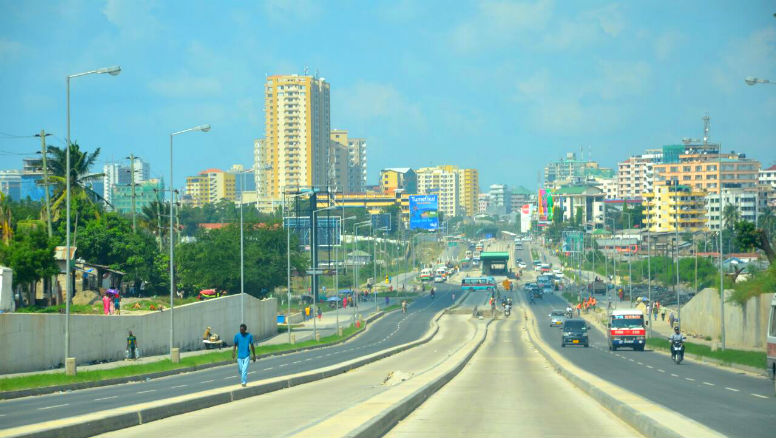
Let’s start with talking about economic infrastructure, unfortunately Tanzania does quite poorly on this. Out of their total 88.200 kilometers of roads a mere 3.704 are actually paved! This makes large areas of the country virtually inaccessible during the rainy seasons, which is a big barrier in their economic growth. The state of railways isn’t much better at only 3.569 kilometers of railway. This level of inaccessibility makes economic growth just so much harder. Their communications are doing better, albeit still not excellent. Let’s start of with the good, Tanzania has 104 mobile phone subscriptions per 100 people. In other words just about everyone is reachable. However they only have 13 internet subscriptions per 100 people, leaving an overwhelming majority of the population without reliable access to the world’s greatest information source. Furthermore only 36% of the country has access to electricity, 50% to water and 34% to sanitation. This means a whole lot of people simply do not have the tools available to them to fulfill their potential and develop themselves, which only hurts the country in the long run.

Which brings us to social infrastructure, the infrastructure that looks to develop humans. Luckily primary education completion rates are quite decent in Tanzania at 81% however only 41% of children move onto a secondary school and only 10% onto a upper secondary school level. This is definitely a problem as it means way too little people become educated and can develop the country.

It is very clear Tanzania’s infrastructure needs a lot of improvement, sooner rather than later. How do you believe this should be approached? And sector of infrastructure needs to be prioritized?

Sources:

EPDC. (2014). EPDC NEP Tanzania. Retrieved from epdc.org: https://www.epdc.org/sites/default/files/documents/EPDC%20NEP_Tanzania.pdf

Nations Encyclopedia. (n.d.). Tanzania – Infrastructure, power, and communications. Retrieved from nationsencyclopedia.com: https://www.nationsencyclopedia.com/economies/Africa/Tanzania-INFRASTRUCTURE-POWER-AND-COMMUNICATIONS.html

Takouleu, J. M. (2018, September 20). Tanzania: World Bank finances water, electricity and sanitation. Retrieved from afrik21.africa: https://www.afrik21.africa/en/tanzania-world-bank-finances-electricity-water-and-sanitation/

Water.org. (n.d.). Tanzania’s water crisis. Retrieved from water,org: https://water.org/our-impact/tanzania/

World Bank. (n.d.). Infrastructure. Retrieved from worldbank.org: https://data.worldbank.org/topic/infrastructure


Poverty

Today we are going to talk about poverty, how its measured and how Tanzania is doing on those measurements. When we talk about poverty there’s quite a few distinctions to make. There’s relative poverty (e.g. people who are struggling to make ends meet in the western world and require government assistance) and then there’s absolute poverty, where people make below $2 a day and have great difficulties surviving.

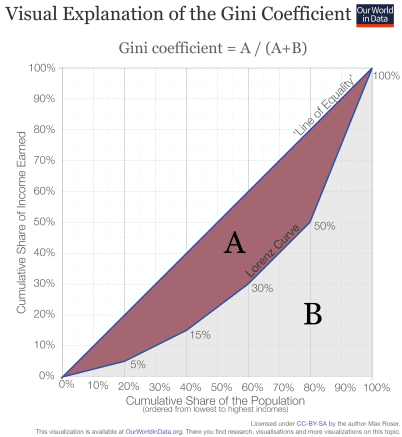
Some ways we can measure different kinds of poverty in a country are through; the Gini Index, a number that tells us the level of income inequality, the food poverty line (how many people cannot afford to buy the required food), the non food poverty line, the Human poverty index which is a UN index about the standard of living in a country, or other statistics such as the amount of people with access to clean water, plumbing, doctors and education.

gini

That brings me to a closer look at the case of Tanzania, according to UNICEF in 2012 the per capita national income was $570 per year which is far below the $2 line of absolute poverty. Additionally Tanzania has a GINI index of 37.82 this means there is a large level of income inequality, in fact the top 10% hold over 30% of the country’s income, while the lowest make do with around 3%. The country doesn’t perform great at access to improved water resources either with a mere 53.3% and even worse on sanitation at 11.9%. Education wise things are a bit better with a literacy rate of around 75% and an enrollment rate of around 98% in primary school. However if we look at secondary school things nosedive to a mere 26%.

From these numbers we can quite clearly see that unfortunately Tanzania is quite a poor country, despite its natural resources which include gold, diamonds, tanzanite and large natural gas fields, let alone the beauty of the country and its potential for tourism. Why is that? Corruption? Are people not making full use of the potential the country has? Please tell me what you think


Sources:

Trading Economics. (2012). GINI index in Tanzania. Retrieved from tradingeconomics.com: https://tradingeconomics.com/tanzania/gini-index-wb-data.html

Unicef. (2013, December 31). Statistics Tanzania. Retrieved from unicef.org: https://www.unicef.org/infobycountry/tanzania_statistics.html


Defining Economic Development

What is Economic Development? Our first order of business will be trying to define what “Economic Development” really is and of course how to measure it. This already seems incredibly hard, when one thinks of Economic Development multiple things come to mind such as overall income, income equality, healthcare and infrastructure, just to name a few things. Of course there are some official definitions as well, the one I personally find most accurate goes as follows:

“Program or group of policies or activity that seeks to
improve the economic well being and quality of life for
a community by creating and retaining jobs that
facilitate growth and provide a stable tax base”

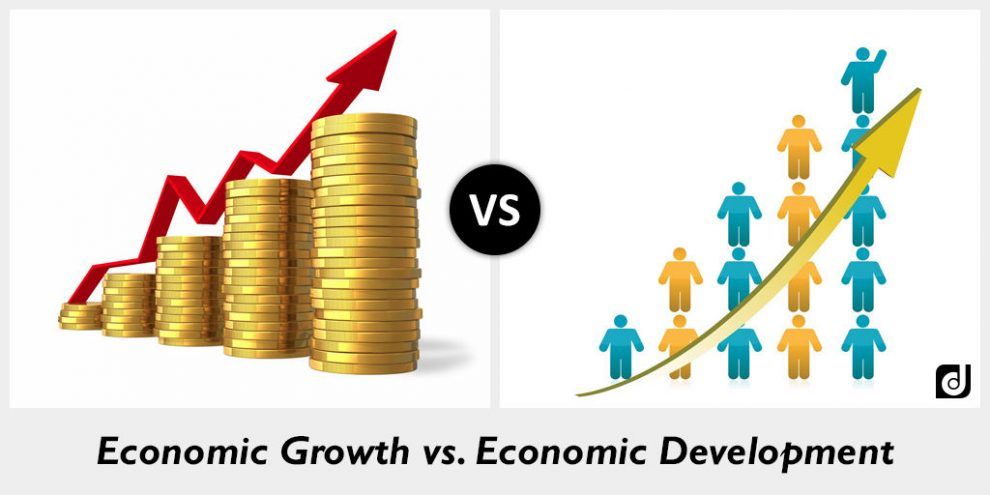
However even this definition is still somewhat limited, it for example fails to take into account factors such as sustainable development. What use is Economic Development after all if it erodes a country’s resources, causing it to collapse a few generations later. Therefore I think we shouldn’t get to hung up about a definition, and rather keep the big picture in mind which I see as the overall improvement of the well-being of a country’s population through sustainable means.

Now that we have a definition or idea of what Economic Development is, we of course have to find a way to measure it. And once again we run into a problem, do we just look at a country’s GDP per capita? Of course this gives us an idea about the level of income a country’s people have, and with higher income generally comes a higher standard of living. However it doesn’t tell us anything about income equality, what if the top 1% own 80% of the nation’s wealth and the rest struggles to survive. It doesn’t tell us anything about informal economies either, what if many of those people with no statistical income are making a living with under-the-table work. Neither does it necessarily tell us anything about people’s education, health or happiness.

So it is important we use various statistics to measure Economic Development. Economic growth tells us how the economy is doing and how profitable a country is, Shared economic growth looks at the equity that is involved in that growth and whether it is fair and sustained economic growth tells us how good the growth is for the future. Two important numbers in measuring these are GNP (Global National Product) and HDI (Human Development Index)

Another useful way of looking at the level of development within a country can be done by taking a closer look at its industries. Depending on how far developed a country’s Primary (Agriculture), Secondary (Industry), and Tertiary (Services) sectors are we can divide countries in the categories undeveloped, developing and developed. Generally speaking the more developed a country the higher it’s Tertiary sector. However this method has its problems as well, what if a country’s Primary sector makes up only 10% of its GDP versus 60% in its Tertiary, but over 60% of the actual population works in the Primary sector while only 10% does in the Tertiary? The numbers would tell us this country is most likely developed, or at least developing. The largest part of the population however would most likely be living in poverty.

The last way to measure economic development I’ll discuss is HDI, or the Human Development Index. Although it is by no means perfect either I find this to be quite a good way of measuring. HDI looks at various factors such as literacy, life-expectancy, human-rights and other social aspects that influence quality of life to a great deal. It of course also takes into account economic aspects through the PPP (Purchase Power Parity) which looks at how much an average household’s income is worth within the country. If I were to pick a single statistic to measure development it would be this, however luckily we are not limited by such things and as such I’d recommend using a variety of statistics to determine development such as HDI, GDP, PPP, Doctors per capita, Economic data per sector, income equality, upward mobility and freedom indexes.

Do you agree or disagree with me, or have anything to add? Please tell me, because I’m always interested in other people’s perspectives.